
Istituto Marangoni Miami
16 Jun 2026
upd: 16 Jun 2026

0 Average rating (0 reviews)

who is vera wang

Vera Wang: Biography, Career, Education, and Lessons for Aspiring Designers

Few careers in fashion carry the same narrative weight as Vera Wang’s. She did not graduate from a design school at twenty-two and launch a brand at twenty-five. She competed as a figure skater, spent sixteen years at Vogue, worked as an accessories director at Ralph Lauren, and did not design her first wedding gown until she was forty years old. By any conventional measure, the Vera Wang story is one of the most instructive in the industry — not because it followed the expected path, but precisely because it did not.

For students researching fashion inspiration and professional pathways, the Vera Wang biography offers something more useful than a success story: it offers a complete picture of how creative careers actually develop — through setbacks, pivots, accumulated expertise, and the willingness to identify a gap and move toward it.

who is vera wang

vera wang designer
vera wang designer

Who Is Vera Wang?

Vera Ellen Wang was born on June 27, 1949, in New York City, to Chinese immigrant parents. Her father, Cheng Ching Wang, was a successful businessman; her mother, Florence Wu, was a translator at the United Nations. Wang grew up in a household that valued both cultural refinement and professional ambition — an environment that would shape her instincts as both a designer and an entrepreneur.

Today, Vera Wang the designer is recognized globally as one of the most influential figures in American fashion. Her work — rooted in the bridal market and extended across ready-to-wear, accessories, fragrance, jewelry, and homeware — has redefined how luxury, femininity, and modernity intersect in contemporary design. Her Vera Wang accomplishments include the CFDA Womenswear Designer of the Year award (2005), the André Leon Talley Lifetime Achievement Award from the Savannah College of Art and Design, and a sustained global brand presence built over more than three decades.

Vera Wang's Background and Education

vera wang biography

Understanding Vera Wang’s background requires beginning not with fashion but with figure skating — because that early competitive experience shaped the discipline, precision, and performance awareness that would define her design aesthetic throughout her career.

Figure Skating: The First Discipline

Wang began skating competitively at age eight. By her late teens, she was competing at a national level, partnering with James Stuart for pairs competition. In 1968, Wang competed in the U.S. Figure Skating Championships but did not qualify for the Olympic team. The setback was significant — but it proved formative. The discipline of competitive performance, the attention to the relationship between movement and appearance, and the experience of navigating failure without abandoning ambition all remained central to how Wang approached every subsequent chapter of her career.

Vera Wang’s Education: Paris and Art History

Following her skating career, Wang pursued formal academic study. She attended the University of Paris before completing her degree in art history at Sarah Lawrence College in Bronxville, New York, graduating in 1971. While Vera Wang’s education was not in fashion design in the conventional sense, her grounding in art history provided the visual intelligence, cultural context, and historical awareness that would later distinguish her editorial eye at Vogue and her design perspective in her own collections.

Her academic background is one of the more interesting facts about Vera Wang that often surprises students researching her career: she did not attend a fashion design school in the traditional sense, yet developed one of the most refined design sensibilities in the industry — a product of her editorial experience, her competitive athletic background, and her instinctive understanding of how garments perform on the body in motion.

vera wang biography
vera wang biography

Vera Wang's Career: From Vogue to Bridal to Global Brand

Vogue: Sixteen Years at the Center of Fashion

In 1971, at the age of twenty-two, Wang joined Vogue as a fashion assistant. Her rise was rapid: by twenty-three, she had been appointed fashion director — one of the youngest people to hold that role at the magazine. Over the sixteen years that followed, Vera Wang’s career at Vogue gave her unparalleled access to the full spectrum of the industry. She worked directly with photographers, designers, stylists, and creative directors at the highest level of the fashion system, developing an editorial intelligence that would later inform every design decision she made.

When the position of editor-in-chief became available at Vogue, Wang was passed over — the role went to Anna Wintour. Rather than treating the rejection as a ceiling, Wang treated it as a signal to redirect. In 1987, she left Vogue and joined Ralph Lauren as accessories director.

Ralph Lauren: The Business Education

Wang’s two years at Ralph Lauren added a dimension to her professional formation that editorial work alone could not provide: direct exposure to the commercial mechanics of a major fashion brand. She observed how a global fashion empire managed product development, brand consistency, and market positioning — knowledge that would prove essential when she eventually built her own business.

The Bridal Pivot: Founding Vera Wang Bridal

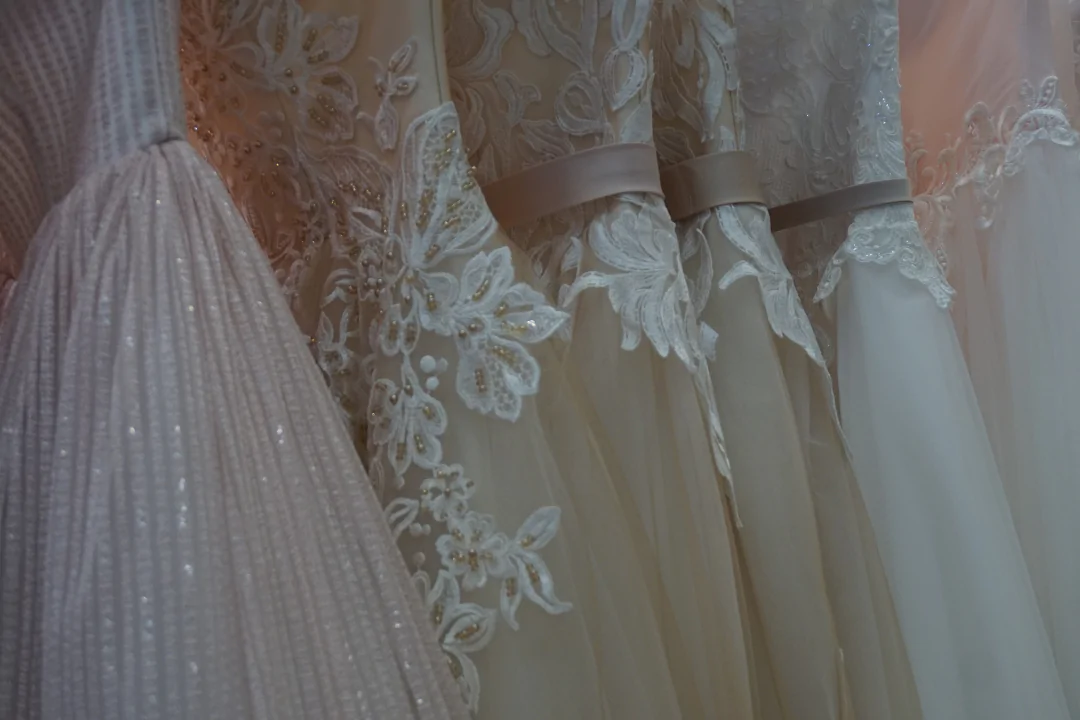
In 1989, at forty years old and newly engaged, Wang went looking for a wedding dress. What she found across every boutique and bridal salon she visited was a market characterized by limited design ambition, poor fabric quality, and a fundamental disconnect between the sophistication expected by modern brides and the options available to them. The gap was clear. Her father provided an initial investment of one million dollars, and Wang moved forward.

In 1990, she opened her first bridal boutique on Madison Avenue in New York City. Her initial approach was characteristically editorial: she began by sourcing and customizing gowns from Paris and London couture houses before transitioning to original design. The store quickly became a destination for brides who wanted something beyond the conventions of the existing market — garments with a cleaner aesthetic, higher material quality, and a design language rooted in minimalism and structural elegance.

Expansion: From Bridal to Global Fashion Brand

The Vera Wang fashion designer story does not stop at bridal. Through the 1990s and 2000s, Wang methodically extended her brand across categories while maintaining the design coherence that had made her bridal work influential. Her Vera Wang accomplishments in this expansion phase include:

  • Ready-to-wear collections launched in 2004, extending her aesthetic from bridal into eveningwear and contemporary fashion
  • Vera Wang Lavender — a more accessible diffusion line that brought her design language to a broader market
  • Fragrance — multiple successful fragrance launches, beginning with the debut Vera Wang fragrance in 2002
  • Jewelry, eyewear, and homeware — category extensions that built a comprehensive lifestyle brand around the core design identity
  • Figure skating costume design — a full-circle return to her skating origins, designing competitive costumes for Olympic and World Championship figure skaters including Nancy Kerrigan and Michelle Kwan

Today, the Vera Wang brand operates globally, with flagship stores in New York, Los Angeles, Tokyo, Sydney, and beyond — a consistent presence across both the luxury bridal market and the broader contemporary fashion landscape.

interesting facts about vera wang

Interesting Facts About Vera Wang

  • She almost competed in the 1968 Olympics — Wang was a competitive figure skater who narrowly missed Olympic qualification, a setback that directly redirected her toward fashion
  • She became fashion director at Vogue at twenty-three — one of the youngest people to hold that role at the magazine, and remained there for sixteen years
  • She designed her first wedding gown at forty — dissatisfied with what she found while shopping for her own wedding dress, she decided to design it herself; that decision became a brand
  • Her father’s investment launched the business — the initial capital for her Madison Avenue boutique was a one million dollar investment from her father, Cheng Ching Wang
  • She has dressed Olympic figure skaters — including Nancy Kerrigan, Michelle Kwan, and Evan Lysacek, connecting her two defining early passions in a single professional act
  • She received the CFDA Womenswear Designer of the Year award in 2005 — the highest recognition in American fashion design, awarded by the Council of Fashion Designers of America
  • The Vera Wang brand spans over ten product categories — from bridal and ready-to-wear to fragrance, jewelry, eyewear, homeware, and beyond

What Aspiring Designers Can Learn from Vera Wang's Story

The Vera Wang story is studied in fashion education not as an anomaly but as a model for how creative careers are actually built — not through a single breakthrough moment, but through the disciplined accumulation of experience across multiple professional contexts.

  • Setbacks are redirections, not endings

Wang’s two most significant early disappointments — missing the Olympic team and being passed over for the editorship at Vogue — both proved to be inflection points rather than endpoints. In each case, she used the redirection to develop capabilities she would not have acquired on the original path. Students navigating their own early career uncertainty will find the Vera Wang biography a more honest and useful model than the overnight success narratives that tend to dominate industry media.

  • Accumulated expertise compounds

Sixteen years at Vogue gave Wang an editorial eye. Two years at Ralph Lauren gave her business process knowledge. A lifetime of competitive athletics gave her an understanding of how garments function in motion. None of these experiences were wasted — each one contributed directly to the Vera Wang designer who opened her first boutique in 1990. For students across fashion undergraduate programs, this is the argument for breadth of study alongside depth of specialization.

  • Market gaps are design briefs

Wang’s founding insight was not a creative vision in the abstract — it was the observation of a specific, concrete gap in the market: brides with sophisticated taste had no good options. She did not begin with a collection; she began with a problem. This is as instructive a lesson in design thinking as any formal methodology — and it is one that connects directly to how successful designers at every level approach their work.

  • Identity and aesthetic coherence sustain brands

What has allowed the Vera Wang brand to expand across categories without losing its identity is a consistent design point of view: minimal, structural, emotionally precise, and rooted in the relationship between the body and fabric in movement. That coherence was not accidental — it developed from the discipline of figure skating, the rigor of editorial work, and years of observation at the highest levels of the fashion system. For students developing their own creative identity within a bachelor of fine arts in fashion design or master degree in fashion design, Wang’s career demonstrates why a distinct and consistent aesthetic voice is not a luxury — it is the foundation on which an enduring brand is built.

The Miami School of Fashion & Design

Build Your Fashion Career at Istituto Marangoni Miami

The Vera Wang career is a study in how creative ambition, professional discipline, and market intelligence combine to build something lasting. It is also a reminder that the path into fashion rarely looks the way prospective students expect — and that the education which best prepares a designer for a long career is the one that develops not just technical skill, but judgment, perspective, and the capacity to identify and respond to opportunity.
At Istituto Marangoni Miami, those capabilities are developed within an environment that reflects the real conditions of the global fashion industry. Located in the heart of Miami’s Design District, surrounded by luxury brands, design studios, and an active international fashion community, students engage with the industry not as observers but as participants — from their first semester through to graduation.
As an internationally recognized fashion design school, Istituto Marangoni Miami offers programs at every level of fashion education — taught by faculty with active professional careers and informed by the Italian academic heritage that has shaped some of the most influential names in global fashion.

Whether beginning with an associate degree in fashion styling, developing your design identity through a bachelor of fine arts in fashion design or bachelor degree in fashion styling, or advancing into graduate-level specialization through a master degree in fashion design, the academic experience at IMM is designed to prepare you for a career that can sustain, adapt, and grow — across decades, disciplines, and market conditions.

Vera Wang opened her first boutique at forty. The designers who build careers that last are those who arrive prepared — with the technical mastery, creative clarity, and professional intelligence to recognize the moment and act on it.

Explore all programs at Istituto Marangoni Miami and begin building the foundation that makes a long career in fashion possible.

The Miami School of Fashion & Design