Uma Peña-Cabrera Student Writer
15 Jun 2026
upd: 15 Jun 2026

0 Average rating (0 reviews)

pantone color of the year

Pantone Color of the Year: What It Is, How It's Chosen, and Why It Matters for Fashion

Every December, a single color announcement generates coverage across fashion media, interior design publications, brand strategy discussions, and consumer trend forecasts simultaneously. The Pantone Color of the Year is not simply a shade — it is a cultural statement, a commercial signal, and a design directive that ripples across industries for the twelve months that follow.

For fashion students, understanding what a Pantone color is, how the annual selection process works, and why the Pantone Color of the Year carries the influence it does is foundational knowledge. Color is among the most immediate and emotionally potent decisions a designer makes — and the Pantone system is the professional language through which that decision is communicated across every part of the global supply chain.

pantone color of the year

paint color of the year

What Is a Pantone Color?

Pantone was founded in 1963 as a solution to one of the printing industry’s most persistent problems: the inability to reproduce color consistently across different presses, manufacturers, and geographic locations. Before the Pantone Matching System existed, a color described as “deep burgundy” by a designer in New York could be interpreted — and printed — very differently by a manufacturer in Milan or a retailer in Tokyo.

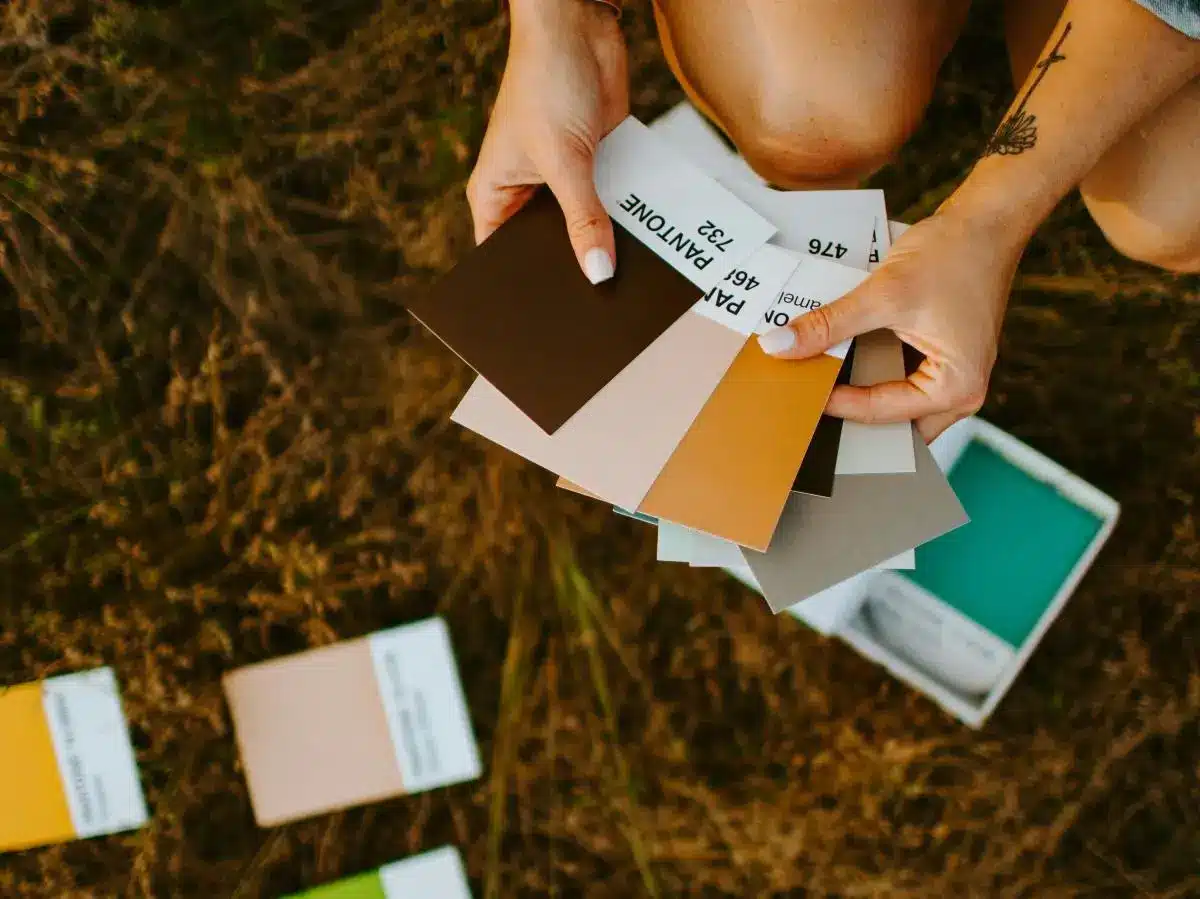
The Pantone Matching System assigned a standardized numerical code to each color in its catalog, allowing designers, manufacturers, and brands to communicate color specifications with complete precision regardless of medium, material, or location. A Pantone color is, in essence, a universally recognized color reference — a shared language that eliminates ambiguity from the creative and production process.

Today, Pantone’s catalog contains thousands of standardized colors used across fashion, interior design, graphic design, product development, printing, and digital media. The Pantone Color Institute — the division responsible for color forecasting and cultural analysis — is the body that selects the annual Pantone Color of the Year.

When Did the Pantone Color of the Year Start? A Brief History

pantone color of the year list

The Pantone Color of the Year was introduced in 1999, with the first official selection — Cerulean (15-4020) — announced for the year 2000. The program was conceived as a cultural and educational initiative: a way to bridge the gap between color theory, global cultural movements, and the practical decisions made by designers, brands, and manufacturers each year.

The Pantone Color of the Year history reflects the cultural preoccupations of each era with notable consistency. The inaugural choice of Cerulean — a calm, expansive sky blue — was selected to usher in the new millennium with a sense of clarity and possibility. In the years that followed, selections have responded to everything from post-recession optimism (Emerald, 2013) to the dual tensions of uncertainty and resilience (Illuminating & Ultimate Grey, 2021) and the tactile warmth of post-digital desire (Mocha Mousse, 2025).

The Pantone Color of the Year list from 2000 to 2025:

  • 2000: Cerulean (15-4020)
  • 2001: Fuchsia Rose (17-2034)
  • 2002: True Red (19-1664)
  • 2003: Aqua Sky (14-4811)
  • 2004: Tigerlily (17-1456)
  • 2005: Blue Turquoise (15-5217)
  • 2006: Sand Dollar (13-0002)
  • 2007: Chili Pepper (19-1557)
  • 2008: Blue Iris (18-3943)
  • 2009: Mimosa (14-0848)
  • 2010: Turquoise (15-5519)
  • 2011: Honeysuckle (18-2120)
  • 2012: Tangerine Tango (17-1463)
  • 2013: Emerald (17-0145)
  • 2014: Radiant Orchid (18-3224)
  • 2015: Marsala (18-1438)
  • 2016: Rose Quartz & Serenity (13-1520 & 15-3817)
  • 2017: Greenery (15-0343)
  • 2018: Ultra Violet (18-3838)
  • 2019: Living Coral (16-1546)
  • 2020: Classic Blue (19-4052)
  • 2021: Illuminating & Ultimate Grey (13-0647 & 17-5104)
  • 2022: Very Peri (17-3938)
  • 2023: Viva Magenta (18-1750)
  • 2024: Peach Fuzz (13-1023)
  • 2025: Mocha Mousse (17-1230)
pantone color of the year list

How Does Pantone Choose the Color of the Year?

The selection process behind the Pantone Color of the Year is more rigorous — and more globally informed — than most people realize. Research for each year’s selection begins approximately nine months before the announcement, typically in the spring preceding the December reveal.

The Research Framework

  • Pantone Color Institute experts conduct extensive research across multiple sectors simultaneously. Their methodology draws from a deliberate cross-disciplinary scan of global culture:
    Entertainment and media: Film, television, music, and digital content — what aesthetic directions are gaining traction in popular culture, and what emotional tones are dominating visual storytelling?
  • Design and architecture: Directional shifts in interior design, product design, and architectural aesthetics, which often anticipate broader consumer color preferences by twelve to eighteen months
  • Runway collections: Analysis of fashion week presentations across major global markets, identifying recurring color directions across multiple designers and price points
  • Socioeconomic and geopolitical context: The broader cultural mood — periods of uncertainty, transition, optimism, or recovery — directly influences which colors feel emotionally resonant at a given moment
  • Consumer behavior data: Trend tracking across retail, lifestyle, travel, and technology categories, capturing emerging consumer desires before they reach mainstream saturation

The Selection Criteria

The final selection is not simply the most popular color trending across these categories — it is the color that Pantone’s analysts determine best captures the cultural moment: the collective emotional state, the aspirational mood, and the directional shift that defines the period. The color is chosen to communicate something meaningful about where the world is, not simply where design has been.

This is why the Pantone Color of the Year announcement generates the level of industry attention it does. It is not a paint brand deciding on a seasonal palette — it is a cultural forecast informed by nine months of global research, delivered as a single, precise color statement.

pantone color of the year history

Why Is the Pantone Color of the Year Important for Fashion?

The question of why the Pantone Color of the Year is important has a different answer depending on where you sit within the industry. For brands and retailers, it is a commercial signal. For designers, it is a creative reference point. For students, it is an education in how color functions as both cultural language and market force.

It Shapes Product Development Across the Supply Chain

The fashion and retail supply chain operates on long lead times. By the time a garment reaches a shop floor, its design decisions were made six to eighteen months earlier. The Pantone Color of the Year announcement provides a shared reference that coordinates those decisions across manufacturers, fabric mills, dye houses, brands, and retailers — ensuring that the market can produce and present a coherent color direction in the season it is most relevant.

It Functions as a Trend Accelerator

Once a color is announced, its appearance across fashion, beauty, interior design, product packaging, and digital media accelerates exponentially. The Pantone Color of the Year does not simply reflect the fashion cycle — it actively amplifies it, creating a concentrated period of cultural visibility that rewards brands who move early and penalizes those who respond too late.

It Provides a Design Vocabulary That Crosses Disciplines

One of the most practically useful aspects of the Pantone Color of the Year for students is its cross-disciplinary reach. A fashion designer, an interior designer, a graphic designer, and a product developer can all orient their work around the same color reference — which is why what the color of the year is becomes a conversation that extends far beyond any single creative field. For students studying across disciplines — from fashion design to master of fine arts in interior design — the Pantone system is the shared language that makes interdisciplinary collaboration possible.

It Develops Color Intelligence as a Professional Skill

For students developing fashion sketches, building mood boards, or sourcing fashion inspiration, understanding the Pantone Color of the Year is a practical exercise in reading the market. It asks the designer to consider not just what they find aesthetically compelling, but what the cultural moment demands — and how to position creative work within a broader conversation about color, emotion, and consumer desire.

Where to See the Pantone Color of the Year in Action

The Pantone Color of the Year permeates the visual environment more thoroughly than most people consciously notice — which is itself a useful exercise in developing observational fluency as a designer.

  • Fashion runway and retail: From directional designer collections through to high street capsules, the Color of the Year typically appears in outerwear, accessories, footwear, and accent pieces within the first two to three seasons following the announcement
  • Editorial photography: Fashion magazines and digital content platforms build color stories, beauty editorials, and lifestyle shoots around the announcement throughout the year
  • Interior design and spatial environments: Commercial spaces — retail environments, hospitality venues, exhibition design — frequently incorporate the Color of the Year in accent walls, soft furnishings, and decorative objects
  • Product design and packaging: Consumer goods brands update seasonal packaging, product colorways, and brand campaigns to align with the cultural color direction
  • Digital and graphic design: UI palettes, brand identity updates, and digital campaign visuals across technology, beauty, and lifestyle brands often reference the annual selection

Developing the habit of identifying the Pantone Color of the Year in these different contexts sharpens color literacy — the ability to read, apply, and communicate color with professional precision across materials, media, and scales. This is an active practice, not a passive one, and it directly supports the development of a sophisticated design eye.

when did pantone color of the year start

How Fashion Students Can Apply the Pantone Color of the Year

Understanding the Pantone Color of the Year is most valuable when it is applied — when students actively integrate it into their creative practice rather than simply noting the announcement and moving on.

  • Incorporate it into collection research: Use the Color of the Year as a starting point for mood board development, exploring how the color’s emotional associations connect with your collection’s conceptual direction
  • Study its relationship to the fashion cycle: Identify which designers moved early with the color, which interpreted it directionally versus commercially, and what that reveals about market positioning and trend timing
  • Practice color blocking and palette development: Experiment with how the Color of the Year interacts with neutrals, analogous tones, and contrasting shades — developing the technical color intelligence that informs professional palette decisions
  • Apply it across disciplines: Consider how the same color functions differently in garment design versus interior design versus graphic identity — developing the cross-disciplinary color awareness that increasingly defines versatile creative professionals
  • Build a personal Pantone Color of the Year archive: Tracking the annual selections alongside cultural events and industry shifts over time develops a sophisticated understanding of how color functions as a cultural barometer — an invaluable perspective for any professional operating within the trend cycle
when did pantone color of the year start
The Miami School of Fashion & Design

Develop Your Color Intelligence at Istituto Marangoni Miami

At Istituto Marangoni Miami, color is not a finishing detail — it is a foundational design discipline. Understanding the Pantone Color of the Year, its cultural context, and its practical application across materials, collections, and spaces is part of how IMM prepares students to work with the full sophistication that the fashion industry demands. Located in Miami’s Design District — one of the most color-rich, culturally layered design environments in the Americas — students develop color intelligence within a living laboratory of visual stimulation and professional reference.

As an internationally recognized fashion design school, Istituto Marangoni Miami integrates color theory, trend forecasting, and cross-disciplinary design thinking into programs at every level — taught by faculty whose active industry practice brings the theory to life with current, market-connected insight.

Whether building your foundation through an associate degree in fashion design or associate degree in fashion styling, advancing your creative identity through a bachelor of fashion design or bachelor degree in fashion styling, or developing advanced expertise through a master degree in fashion design or master of fine arts in interior design, you will learn to read color not just as an aesthetic preference — but as a market signal, a cultural statement, and a precision professional tool.

Color is everywhere. The question is whether you are fluent in its language — or still learning the alphabet. The right education makes that difference.

Explore all programs at Istituto Marangoni Miami and begin developing the color intelligence that every serious fashion professional needs.