
01 Jun 2026
upd: 02 Jun 2026
The Five Stages of the Fashion Design Process: From Research to Final Production
Fashion is widely understood as a creative industry. What is less visible to those outside it is the degree to which creativity in fashion depends on structure. Behind every finished garment — from a directional runway piece to a precisely engineered commercial product — is a disciplined fashion design process that moves from initial research through to manufacturing and market release.
Understanding the stages of design is not just foundational knowledge for students entering the industry — it is the framework through which professional designers manage creative complexity, maintain quality standards, and deliver work that meets both aesthetic and commercial expectations. For students researching how to become a fashion designer, this process is the architecture of the career itself.
The following breaks down the five core fashion design process steps — what happens at each stage, why it matters, and how professional training prepares designers to execute each phase with precision and confidence.

Stage 1: Research and Inspiration
Every collection begins with a question, not an answer. The research and inspiration stage of the design process in fashion is the foundation on which every subsequent decision rests — and it is more methodical than the word “inspiration” might suggest.
Research at this stage has two primary functions. The first is establishing context: understanding the market landscape, the target customer, the competitive environment, and any technical or commercial parameters the collection must address. The second is building a visual and conceptual library of references that will shape the aesthetic direction of the work.
Where Designers Find Inspiration
Strong design research draws from a wide range of sources — and learning to cultivate this breadth is one of the core fashion designer skills developed through formal study.
- Historical archives and vintage references: Fashion history provides construction techniques, silhouette language, and color stories that can be recontextualized for contemporary collections
- Art, architecture, and material culture: Sculpture, painting, industrial design, and spatial environments all offer structural and visual references that translate directly into garment concepts
- Travel and direct observation: Urban environments, natural landscapes, local markets, and street culture expand the visual library beyond digital sources
- Digital research platforms: Pinterest, editorial archives, runway databases, and trend forecasting agencies provide organized access to broad visual reference across fashion eras
- Trade publications and runway reviews: Critical analysis of current collections sharpens the ability to identify directional shifts early
The purpose of this stage is not to find something to copy — it is to develop a specific creative direction that is both informed and original. The research exists to make the designer’s subsequent decisions intentional rather than arbitrary.
Stage 2: Sketching and Concept Development
With research complete and a creative direction established, the fashion design process moves into concept development. This is where ideas first take visual form — and the discipline here is to generate broadly before narrowing.
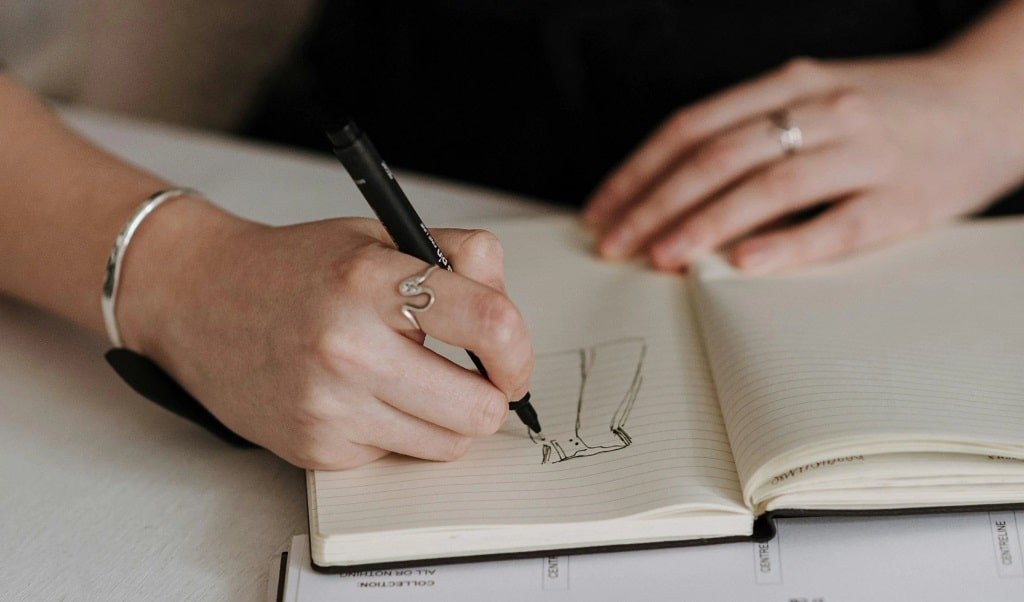
Sketching at this stage functions as thinking made visible. The goal is not polish — it is velocity and range. Quick gesture drawings, silhouette studies, and rough proportion experiments allow a designer to explore multiple directions simultaneously before committing resources to any single concept. A designer who sketches 30 variations of a silhouette early in the process makes better final decisions than one who invests time in refining the first idea that appeared.
What Concept Development Involves
- Mood board construction: Assembling visual references — color, texture, proportion, cultural context — into a cohesive directional statement that communicates the collection’s aesthetic intent
- Silhouette exploration: Sketching the fundamental shapes of garments before adding detail, establishing the collection’s proportion language
- Color palette development: Defining the tonal range and relationships that will carry through the collection
- Technical flat drawings: Moving from expressive sketches to precise technical drawings that communicate construction details to pattern makers and manufacturers
- Concept presentation: Developing the ability to communicate the creative direction clearly — a critical professional skill when presenting to buyers, brand directors, or clients
For students in fashion education, this stage also develops the ability to translate abstract inspiration into concrete design language — one of the highest-order fashion design process competencies, and one that is refined through structured studio critique rather than solo practice alone.
Stage 3: Material Selection and Prototype Creation
Concept becomes object at this stage. Material selection and prototype creation is where the stages of design shift from the visual to the tactile — and where many of the most consequential decisions in the entire process are made.
Material Selection
Choosing the right textile is not a finishing detail — it is a structural decision that shapes every aspect of the garment’s performance, appearance, and commercial viability. The key criteria are:
- Aesthetic alignment: Does the material’s texture, weight, and drape behavior support the design’s intended silhouette and movement?
- Functionality: Will the textile perform correctly for the garment’s intended use — whether that is structured tailoring, fluid eveningwear, or technical performance wear?
- Durability and quality: Does the material meet the quality standards appropriate to the collection’s market positioning?
- Cost and production feasibility: Unconventional textiles or intricate constructions carry higher production costs — material selection must account for the entire manufacturing chain, not just the initial sample
- Sustainability considerations: Ethical sourcing, environmental impact, and end-of-life material behavior are increasingly embedded in material selection decisions across all market levels
Prototype Creation
The prototype — also known as the toile or muslin in garment terms — is the first physical realization of the design concept. Its purpose is to test construction logic, proportion, and fit before more expensive final fabrics are cut. This stage often reveals problems that sketches cannot anticipate: a silhouette that works in two dimensions may not behave as expected when draped on a body; a construction detail that appeared clean in a technical drawing may require significant adjustment once executed in three dimensions.
In contemporary fashion design process practice, digital prototyping tools such as CLO3D allow designers to simulate garment behavior before physical samples are made — reducing material waste, shortening development timelines, and enabling more iterations at lower cost. This digital-physical integration is now a standard component of professional design workflows at leading fashion houses.
Stage 4: Sample Production and Testing
Once the prototype has been refined and approved, the design process in fashion advances to sample production — the creation of a finished garment using actual production materials, intended to represent what the final manufactured product will look and perform like.
The sample production stage is where technical precision and quality control become paramount. Every construction decision made in earlier stages is now executed in final materials, and any remaining issues with fit, construction, or material performance must be identified and resolved before the design is committed to production.
Garment Testing Standards
Professional sample testing covers a range of performance criteria, each addressing a specific aspect of garment quality and commercial suitability. Students studying the fashion design process steps at an advanced level learn that testing is not a formality — it is a quality assurance mechanism that protects both the brand’s reputation and the customer’s experience.
- Colorfastness testing: Evaluates resistance to color change under conditions including sunlight exposure, perspiration, washing, and dry cleaning — critical for all dyed or printed fabrics
- Tear and breaking strength: Measures the structural integrity of the fabric under stress — particularly relevant for performance wear, workwear, and accessories
- Lightfastness testing: Determines the degree to which a product will discolor under daily sunlight exposure, directly affecting long-term customer satisfaction
- Wet and dry rub fastness: Tests whether color transfers to other surfaces in both dry and wet conditions — especially important for leather goods and accessories
- Pilling evaluation: Assesses surface change from friction, particularly for knitted textiles, where pilling directly affects the perceived quality of the finished garment
- Abrasion resistance: Tests how the fabric responds to repeated surface friction — a key durability indicator for garments intended for high-frequency wear
- Bursting strength: Measures the pressure required to rupture the fabric, applied to non-woven textiles including knits, lace, and performance fabrics
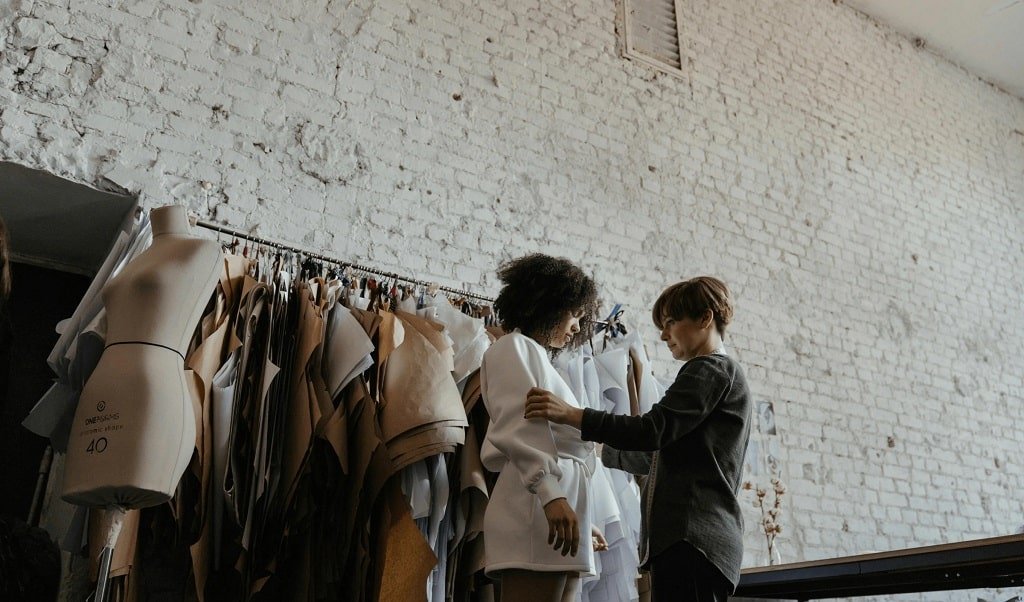
Beyond physical testing, the sample production stage also involves fit sessions — presenting the garment on a model or fit form to evaluate proportion, ease, and construction accuracy against the original design intent. Adjustments at this stage are standard; the ability to identify what needs refinement and why is itself a professional skill that develops through structured studio experience.

Stage 5: Final Refinement and Production
The final stage of the fashion design process translates an approved sample into a production-ready specification and, ultimately, into the finished product that reaches the market. The distinction between refinement during development and refinement after launch is important — and understanding both is part of what makes a commercially aware designer.
Pre-Launch Refinement
Refinements made at this stage address any remaining discrepancies between the sample and the target standard. These adjustments are made before production begins and are driven by fit testing, materials performance data, and manufacturing feasibility. Every detail — button placement, seam allowances, lining choices, embellishment method — is finalized here. Once production commences, changes become expensive; precision at this stage is a form of financial discipline as much as a creative one.
Production and Quality Control
Production involves coordinating with manufacturers to ensure that the approved sample is replicated accurately and consistently at scale. This includes communicating technical specifications clearly, managing grading across size runs, and establishing quality control checkpoints within the manufacturing process.
For designers entering the industry, understanding production constraints — cost per unit, lead times, minimum order quantities, manufacturing methods — is as important as creative fluency. The stages of design do not exist in isolation from commercial reality; the most effective designers understand both dimensions equally.
Post-Launch Refinement
Refinement does not end at launch. Products that reach the market generate customer feedback, sales data, and performance insight that informs the next iteration. Adjustments made after launch — new colorways, updated proportions, material revisions, additional sizing — are typically driven by market data and customer response rather than internal design preference alone. This iterative relationship between design and market is one of the defining dynamics of the design process in fashion, and one that continues throughout a product’s commercial lifecycle.

Why the Design Process Matters for Fashion Students
The fashion design process is not simply a sequence of tasks — it is a discipline of thinking that shapes how a designer approaches every project throughout their career. Students who internalize this process during their education arrive in the industry with a structural advantage: they know how to manage complexity, make informed decisions under time pressure, and produce work that is both creatively strong and technically executable.
This is why professional fashion designer skills encompass far more than drawing or sewing ability. Trend literacy, material knowledge, production awareness, quality testing familiarity, and the capacity to work collaboratively across a supply chain — all of these competencies are developed through structured engagement with the design process steps in an academic and studio environment.
For students at the early stages of considering fashion education — and asking how to become a fashion designer — understanding that the answer involves mastering a rigorous process as much as developing creative talent is itself a valuable starting point.

Master the Fashion Design Process at Istituto Marangoni Miami
At Istituto Marangoni Miami, the fashion design process is not taught as a theoretical framework — it is practiced, stage by stage, within professional-grade studio environments, dedicated ateliers, and digital design laboratories. From the first research brief to the final production specification, students work through the complete stages of design under the guidance of faculty who bring active industry experience to every session.
As an internationally recognized fashion design school, Istituto Marangoni Miami integrates Italian academic heritage with Miami’s dynamic design culture — offering students access to world-class facilities, including CLO3D digital prototyping, professional photography studios, cutting-edge ateliers, and the Edicola resource library. Every element of the academic environment is designed to support mastery of the design process in a context that reflects real industry standards.
Whether beginning with an associate degree in fashion design to build foundational technical expertise, developing a professional design identity through a bachelor of fashion design, or advancing into brand strategy and creative leadership through a master degree in fashion design, the academic experience at IMM is structured around equipping students with both the creative vision and the process discipline that a sustained career in fashion demands.
Fashion is innovation — but innovation without process produces work that cannot be executed, reproduced, or scaled. The designers who consistently build the strongest careers are those who master both dimensions equally.
Explore all programs at Istituto Marangoni Miami and begin building the complete skillset the fashion design process demands.
0 Average rating (0 reviews)