28 May 2026
upd: 28 May 2026

0 Average rating (0 reviews)

what do you learn in fashion school

A Day in the Life of a Fashion Student: What Is Fashion School Really Like?

Curious about what the life of a fashion student actually looks like? The reality is more demanding, more creative, and more industry-connected than most prospective students expect — and far more rewarding than any social media highlight reel suggests.

Fashion school is not simply about styling outfits or sketching garments. It is a structured academic environment where creativity meets technical discipline, cultural research, and professional strategy. Understanding what you learn in fashion school — and how that knowledge is applied daily — is the first step toward deciding whether this is the right path for you.

This guide walks through a typical day of a fashion design student at Istituto Marangoni Miami, covering the curriculum, the environment, the skills developed, and the opportunities that emerge along the way.

what do you learn in fashion school

What Do You Learn in Fashion School?

what do you do in fashion school

Before mapping out the daily schedule, it helps to understand the academic foundation. What you learn in fashion school depends on the level of study and your chosen specialization — but across all programs, the curriculum is built on four interconnected pillars.

1. Design Theory and Creative Development

Fashion education begins with the language of design. Students develop the ability to translate a concept — drawn from art, architecture, culture, or social movements — into a structured collection. This includes mood board development, trend research, color theory, and silhouette studies. Creativity at this level is not passive — it is a practiced, methodical skill.

2. Technical Construction and Garment Skills

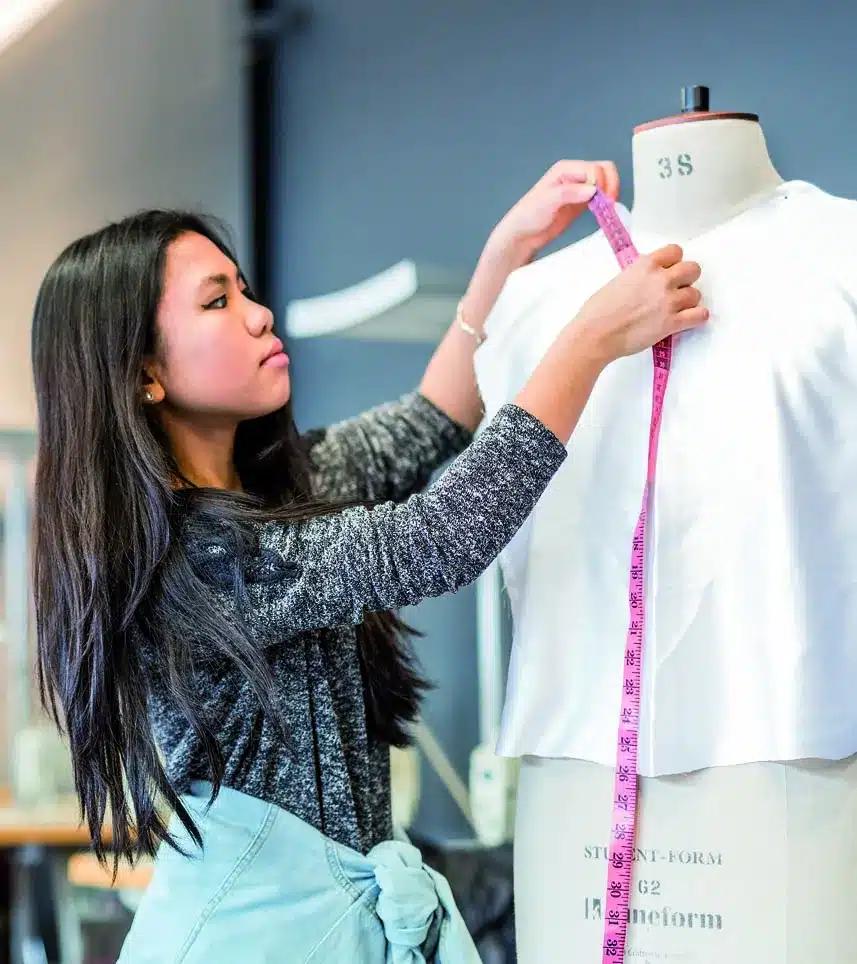
Pattern drafting, draping, garment construction, and fit evaluation form the technical core of fashion design programs. Students learn to work with industrial equipment, understand fabric behavior across different materials, and develop the precision required to move a design from sketch to finished garment. These are hands-on, studio-based competencies built through repetition and faculty mentorship.

3. Digital Tools and Technology

Modern fashion education integrates digital practice alongside traditional craft. Students work with industry-standard platforms including Adobe Illustrator, Photoshop, and InDesign for visual communication and technical drawing. In advanced programs, CLO3D — a leading 3D garment simulation platform — allows students to prototype and visualize collections digitally before physical samples are produced.

4. Fashion Business, Branding, and Industry Awareness

Understanding what you do in fashion school also means engaging with the commercial dimension of the industry. Students study consumer behavior, retail structure, brand positioning, marketing strategy, and sustainability — recognizing that design decisions do not exist in isolation from market forces.

what do you do in fashion school

What Does a Typical Day of a Fashion Design Student Look Like?

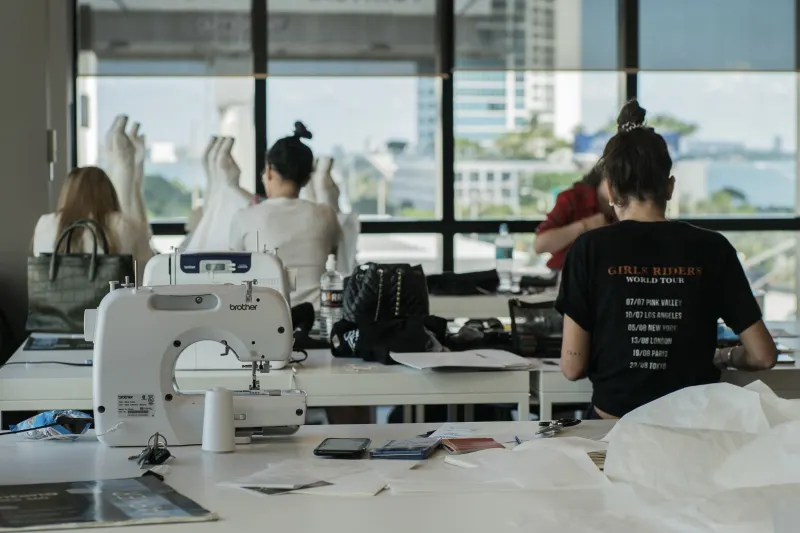
A day in the life of a fashion student at Istituto Marangoni Miami moves between studio practice, academic coursework, independent research, and professional development — often within the same day.

Studio and Research Classes

Studio or lecture sessions cover areas such as Fashion Research & Collection Development, Garment Construction, or Fashion Illustration. Classes at IMM are taught by faculty with active industry experience, which means coursework regularly incorporates real brand references, current market analysis, and genuine professional scenarios.

Before the first class, students often use IMM’s Edicola Café on the fifth floor — a space that doubles as a resource hub housing curated fashion publications, textile samples, and limited-edition books. This is not incidental — access to strong fashion resources is woven into the physical architecture of the campus.

Technical Labs and Atelier Work

Fashion design students work in hands-on environments. Atelier sessions require focused attention: pattern work has to be precise, draping requires an understanding of how different fabrics behave on the body, and construction timelines must be met. Problem-solving under real constraints is practiced constantly.

For students in digital design courses, midday may involve CLO3D sessions — building and refining 3D garment prototypes — or working in the photography studio on editorial concepts and lookbook presentations.

Critiques, Guest Speakers, and Independent Work

Fashion undergraduate programs and fashion graduate programs often include studio critiques — structured presentations where students receive feedback from faculty and peers on work in progress. These sessions develop the ability to articulate creative decisions, respond to professional critique, and refine work based on informed feedback.

Guest speakers from within the industry — designers, brand directors, buyers, and creative strategists — appear regularly throughout the academic year, providing direct exposure to professional perspectives that extend beyond the classroom.

Research, Portfolio Development, and Industry Events

The life of a fashion student does not end when formal classes do. Evenings are often dedicated to independent research, sketchbook development, and portfolio refinement — the cumulative work that defines a designer’s identity over time.

At IMM, students also receive direct notification of industry opportunities: design competitions, fashion week volunteering, brand internships, and professional events in Miami’s Design District. These experiences are not peripheral — they are the mechanism by which students build professional networks while still enrolled.

life of fashion student

What Do You Do in Fashion School? Core Activities Across the Academic Year

Beyond the daily schedule, what you do in fashion school includes a range of structured activities designed to develop both creative and professional capabilities.

  1. Collection development projects — from initial concept and research through to finished garments presented in a formal critique or showcase
  2. Industry collaborations and design competitions — partnerships with brands that place student work within real commercial contexts
  3. Fashion week participation — volunteering and assisting at events including New York Fashion Week, providing backstage and production experience
  4. Portfolio reviews — ongoing evaluation of design output across programs, preparing students for graduate presentations and industry interviews
  5. Internship programs — structured placements with fashion brands, agencies, and creative studios aligned with each student’s specialization
  6. Cross-disciplinary studio work — exposure to interior design, styling, brand communication, and luxury management alongside core design coursework
typical day of a fashion design student

Skills You Develop as a Fashion Student

Understanding what you learn in fashion school is inseparable from the professional skills that accumulate over the course of a program. These are not theoretical competencies — they are practiced and tested in real project environments.

  • Creative problem-solving: Resolving design, fit, and construction challenges under deadline pressure
  • Visual communication: Presenting ideas clearly through sketches, mood boards, technical drawings, and digital tools
  • Technical precision: Executing garment construction, pattern drafting, and material sourcing to professional standards
  • Research methodology: Building collections from credible cultural, historical, and market references
  • Critical thinking: Receiving and integrating feedback from faculty, peers, and industry professionals
  • Time management: Delivering complex creative projects across multiple concurrent deadlines — a reflection of real industry conditions
  • Professional identity: Developing a distinct design voice, portfolio, and personal brand that is market-ready at graduation
typical day of a fashion design student

Is Fashion School Right for You?

The day in my life as a fashion student looks different depending on the program level — and that variation is intentional. An associate-level student focuses on foundational technical skills and design fundamentals. A bachelor’s student begins developing a distinctive creative voice within a broader industry context. A master’s student works at the intersection of design innovation, brand strategy, and professional leadership.

At every level, the consistent thread is this: fashion school demands active engagement. Students who excel are those who bring curiosity into every session, who treat studio time as sacred, and who build on their studies through external research, industry involvement, and peer collaboration.

If the question is whether the life of a fashion student suits you — the honest answer is: it suits those who are not waiting to be creative, but who are already practicing creativity in some form and looking for the structure, mentorship, and professional context to develop it further.

The Miami School of Fashion & Design

Experience Fashion School at Istituto Marangoni Miami

At Istituto Marangoni Miami, a typical day of a fashion design student is designed to mirror the rhythm of the professional industry — creative, demanding, collaborative, and rooted in a global perspective. Located in the heart of Miami’s Design District, surrounded by luxury brands, international galleries, and an active fashion community, students are not studying about the industry — they are operating within it from their first semester.

As an internationally recognized fashion design school, Istituto Marangoni Miami brings together Italian academic heritage and Miami’s cultural energy — offering students access to world-class faculty, professional-grade facilities, and a global network built over decades of fashion education.

Whether you are beginning with an associate degree in fashion styling, developing your portfolio through a bachelor of fine arts in fashion design, or advancing your career with a master degree in fashion design, the academic experience at IMM is built to prepare you not just for your first role — but for a long-term career in one of the world’s most dynamic industries.

What you learn in fashion school shapes who you become as a creative professional. Where you learn it determines the quality of that foundation.

Explore all undergraduate and graduate programs at Istituto Marangoni Miami — and take the first step toward making fashion your profession.