
08 Aug 2025
upd: 30 Jun 2026
Method Dressing:When Fashion Becomes Character
When Zendaya stepped onto the red carpet during the Dune: Part Two press tour wearing a 1995 Mugler robotic bodysuit, the internet responded to a complete act of visual storytelling; an appearance so precisely calibrated to the film’s aesthetic universe that the garment and the character became temporarily inseparable. That is method dressing, and it has become one of the most discussed phenomena in contemporary fashion.
Borrowed from the vocabulary of method acting, the performance technique in which an actor inhabits a character continuously, on and off set, method dressing applies the same logic of sustained, immersive commitment to wardrobe. The clothes are a deliberate extension of a character, a narrative, or a brand identity into every public appearance, press event, and social media post for the duration of a project.
For students in fashion design and styling, method dressing is a sophisticated applied discipline, one that reveals how costume design, styling practice, brand strategy, and visual storytelling intersect at the highest level of the industry.
What Is Method Dressing?
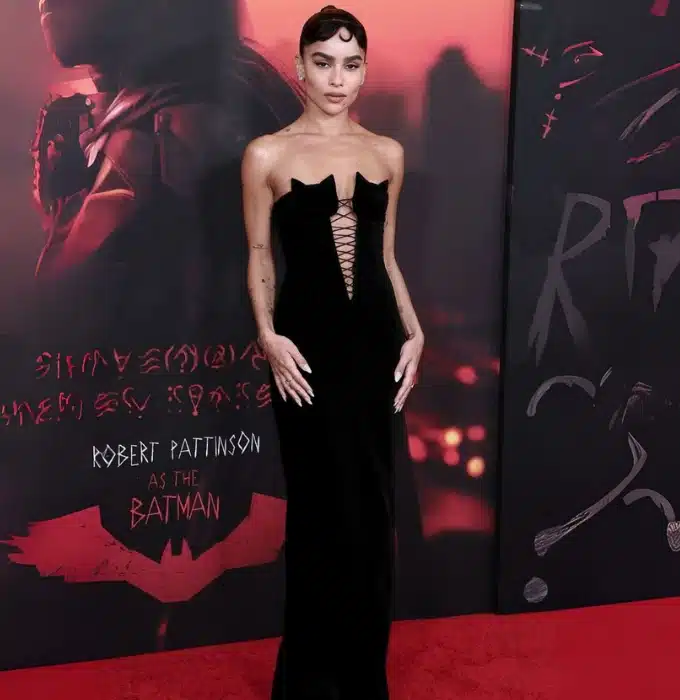
Method dressing is the practice of using wardrobe as a sustained narrative tool, a form of dressing to embody and communicate a character, role, or brand identity across an extended period of public appearances rather than simply selecting appropriate clothes for individual occasions.
The distinction between method dressing and conventional red carpet styling is a matter of intention and coherence. In standard celebrity styling, each appearance is conceived as a discrete event: a specific outfit chosen for a specific occasion, optimized for visual impact at that moment. In method dressing, each appearance is conceived as a chapter in a longer visual story as it utilizes recurring color codes, silhouette language, material references, and thematic symbols that accumulate across a press campaign, promotional cycle, or album era.
The concept gained widespread recognition and cultural vocabulary after Law Roach, widely credited as one of its defining practitioners , articulated the approach explicitly in interviews around the Dune and Challengers campaigns. But the practice itself has much earlier precedents, and its current visibility reflects a broader shift in how celebrities, stylists, and audiences understand fashion’s role in promotional culture.

Method Dressing: Historical Roots and Earlier Examples
While the term method dressing is recent, the practice has deeper roots in how fashion and performance have always intersected. Understanding this history is part of developing the contextual literacy that distinguishes sophisticated stylists and designers from those who engage with trends only at their surface.
Marlene Dietrich and Performative Identity
Marlene Dietrich’s consistent adoption of suits, trousers, and menswear-influenced tailoring throughout the 1930s and 1940s was a sustained public performance of a specific kind of femininity that was inseparable from her screen persona. Her wardrobe off-screen reinforced the ambiguity and authority she projected on it. The continuity between her film roles and her public image was deliberate and professionally managed.
Princess Diana and the Language of Dressing
Princess Diana’s use of clothing as deliberate communication across her public life is one of the most studied examples of sustained wardrobe-as-narrative in the twentieth century. Her choice to wear a black off-shoulder Christina Stambolian gown on the evening of Prince Charles’s tell-all television interview (1994), a dress that had been sitting in her wardrobe for years, previously considered “too daring”, was a precise act of method dressing: clothing deployed as character statement at a specific narrative moment.
The Early 2000s Foundations
The early consolidation of celebrity styling as a professional industry during the 2000s fashion era, driven by the growth of celebrity media, red carpet coverage, and the emergence of the stylist as a credited creative role, created the infrastructure within which method dressing could develop as a recognizable practice. The press tour as a promotional format became increasingly elaborate, and the pressure on stylists to create visual consistency across dozens of appearances over weeks created the conditions for the more intentional, campaign-level approach that defines the current form of the practice.

Method Dressing in Practice: Defining Case Studies
The following examples represent the most significant and thoroughly documented instances of method dressing in recent fashion history, each chosen because it illustrates a specific dimension of how the practice operates.
Zendaya and Law Roach: The Definitive Partnership
The collaboration between Zendaya and image architect Law Roach has produced the most consistently cited body of method dressing work in contemporary fashion. Their partnership treats each press tour as a complete creative project with its own visual logic, arc, and thematic coherence.
For the Dune: Part Two press campaign (2024), the styling drew from the film’s desert civilization aesthetic by featuring sand tones, futuristic architectural silhouettes, structural fabrics, and archival references including the 1995 Mugler “robot” suit. For Challengers (2024), a tennis drama with a love triangle structure, the campaign cycled through three distinct palettes and aesthetic registers, one for each character point in the triangle, before unifying them in a final appearance that synthesized all three. The narrative coherence across those appearances was visible to audiences with no knowledge of the styling methodology behind it: it felt right in a way that created sustained cultural conversation.
Margot Robbie’s Barbie Press Tour
Working with stylist Andrew Mukamal, Margot Robbie’s press tour for Barbie (2023) applied method dressing at a scale and with a commercial integration that had not previously been achieved. Each appearance referenced a specific Barbie doll from the brand’s history, such as the original 1959 swimsuit Barbie, the 1985 “Day to Night” Barbie, and the “Totally Hair” Barbie from 1992, with costume-level accuracy achieved through couture commissions, archive sourcing, and collaboration with the Mattel brand team.
The result was a marketing campaign conducted entirely through wardrobe. No conventional advertising could have generated the cultural engagement produced by Robbie’s appearances, which were photographed, analyzed, and shared globally because they were, in effect, interactive fashion puzzles that rewarded audience knowledge. The method dressing approach transformed the press tour into the campaign.
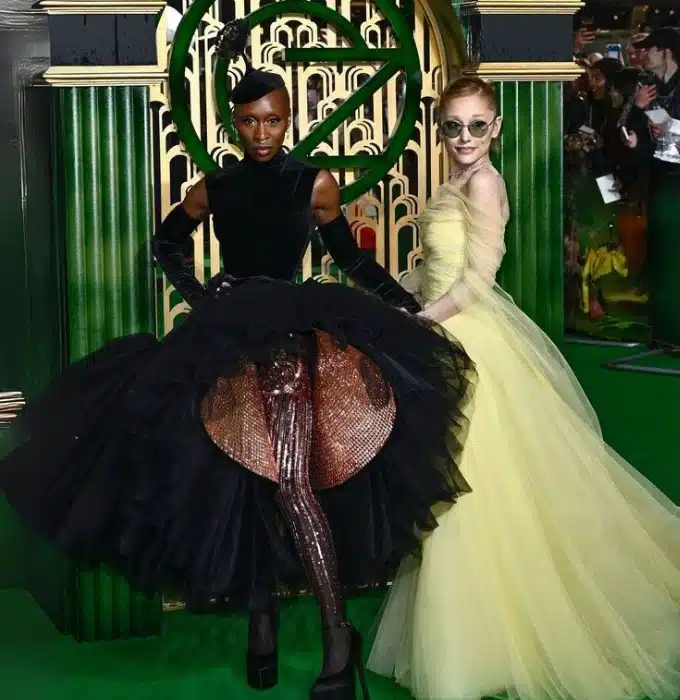
Ariana Grande and the Glinda Transformation
Ariana Grande’s gradual visual shift toward the aesthetic of Glinda, her character in Wicked, began months before the film’s release. Pale pink tones, soft feminine silhouettes, vintage-inspired glamour, and upswept hair styling accumulated across her public appearances in a way that built audience anticipation and character recognition before a single frame of the film had been seen. The method dressing strategy operated as both a teaser campaign and an authentic extension of her performance preparation.
Doja Cat and the Avant-Garde Register
Doja Cat’s appearance at Schiaparelli’s Autumn/Winter 2023 couture show, a head-to-toe look involving 30,000 hand-applied red Swarovski crystals, a corset, and prosthetic ears, represented method dressing operating outside the promotional context entirely. The appearance was not tied to a film or album campaign; it was an act of identity construction in dialogue with the house’s surrealist heritage. It demonstrated that method dressing can function as a form of sustained personal artistic authorship, not only as a promotional tool.
Cate Blanchett: The Archival Approach
For the Tár press campaign (2022–23), Cate Blanchett’s styling drew heavily on archival couture featuring pieces by Alexander McQueen, Vivienne Westwood, and Stella McCartney that carried their own cultural weight and narrative associations, layering the film’s themes of artistic authority and institutional power through the historical resonance of the garments themselves. This archival approach to method dressing is one of the more conceptually sophisticated variants of the practice and has influenced how other campaigns have approached archival sourcing since.

The Stylist's Role in Method Dressing
Method dressing has fundamentally redefined what the stylist’s role can be at the highest level of the industry. In conventional celebrity styling, the stylist is primarily a curator and coordinator sourcing and assembling looks that serve the client’s aesthetic identity and the requirements of specific events. In method dressing, the stylist operates more like a creative director: developing a sustained visual narrative across months of appearances, managing conceptual coherence across dozens of looks, and collaborating with designers, houses, and brand partners to produce a body of work with genuine authorial intention.
The practical methodology of method dressing styling involves:
- Project research: Deep engagement with the source material. This includes reading the script, studying the costume design, understanding the film’s visual references, and identifying the thematic and aesthetic codes that will anchor the campaign
- Archival research: Identifying relevant historical garments, whether from a house’s archive, a vintage collection, or fashion history more broadly, that carry the right cultural and aesthetic resonance for the narrative
- Custom collaboration: Working with designers to commission pieces that are built specifically for the campaign’s visual logic rather than adapted from existing collections
- Narrative arc development: Mapping the campaign’s appearances across its timeline and planning how the visual story will develop.
- Continuity management: Ensuring that color, silhouette, texture, and symbolic elements are woven consistently across appearances so that the narrative is legible to audiences who are following it across multiple events and platforms
Stylists like Law Roach, Andrew Mukamal, and Mimi Cuttrell have built international reputations specifically through their mastery of this approach, demonstrating that method dressing has created a new category of styling practice that requires the combined skills of a costume designer, a brand strategist, a fashion historian, and a creative director.

Fashion Houses That Lend Themselves to Method Dressing
Not all fashion houses are equally suited to method dressing applications. The practice works best with houses whose design language carries inherent narrative weight where the garment already communicates something beyond aesthetics and provides a visual vocabulary that stylists can deploy in service of a specific story.
- Schiaparelli — the house’s surrealist heritage and bold symbolic language (trompe l’oeil anatomy, oversized jewel embellishments, theatrical silhouettes) make it a consistent choice for method dressing applications that require visual impact and conceptual depth in a single look
- Iris van Herpen — architectural, science-inspired couture that references transformation, natural systems, and futurism; well-suited to characters or narratives built around non-human or visionary aesthetics
- Maison Margiela under John Galliano — layered cultural references, deconstructed garment construction, and an aesthetic rooted in memory and appropriation; provides a rich archive for campaigns with complex or ambiguous narrative registers
- Thom Browne — the house’s performative, highly controlled aesthetic (compressed proportions, strict palette, uniform references) communicates authority and precision; regularly used for character work that centers on institutional power or controlled identity
- Alexander McQueen archive — Sarah Burton’s years at the house and McQueen’s own archive provide garments that carry multiple layers of cultural reference: British tailoring, gothic imagery, historical costume, and a persistent tension between beauty and violence

What Method Dressing Teaches Fashion Students
For students across design and styling disciplines, method dressing is a practical education in several of the competencies that define advanced professional practice.
Fashion as Authorship
Method dressing demonstrates conclusively that a stylist or designer’s contribution to a project can have genuine authorial weight. It shows us that clothing choices made with sufficient intention and craft can function as forms of cultural production that stand independently of the garments themselves. This has implications for how students understand their own creative practice: the work is not simply the garment, but the thinking behind the garment, and the narrative it creates in context.
The Relationship Between Costume and Styling
Method dressing sits at the intersection of costume design and fashion styling, and engaging with it requires fluency in both disciplines. Understanding how film costume designers construct visual narratives, develop character identity through clothing, and create continuity across a production is directly relevant to how a stylist approaches a press campaign with the same goals. Students who develop literacy in costume design alongside fashion styling practice are significantly better equipped for this kind of work.
Research as a Core Creative Skill
The methodology of method dressing is, at its foundation, a research practice. The depth and quality of a campaign’s visual storytelling is entirely dependent on the quality of the research that precedes it: the depth of engagement with the source material, the breadth of the archival knowledge, and the precision with which cultural and historical references are selected and deployed. This is a direct argument for the importance of rigorous fashion inspiration research as a foundational practice, not a preliminary one.
Brand Strategy and Visual Communication
Method dressing is also one of the most effective forms of brand communication in contemporary culture and understanding why and how it works is directly relevant to students who will eventually work within brand strategy, creative direction, and fashion marketing contexts. The campaign is the collection; the press tour is the runway. The principles of cohesion, narrative arc, and audience engagement that make method dressing successful are the same principles that make any sustained visual brand identity successful.

Develop the Skills That Method Dressing Demands at Istituto Marangoni Miami
At Istituto Marangoni Miami, the competencies that method dressing demands, such as visual storytelling, cultural research, fashion history, brand strategy, and the ability to work across the full creative ecosystem of the industry, are developed not as separate modules but as an integrated practice. Students learn to think about clothing as communication from their first semester, and they develop the research depth, historical literacy, and creative precision to deploy that thinking at a professional level.
As an internationally recognized fashion design school, Istituto Marangoni Miami is situated in Miami’s Design District, a city and a neighborhood where the convergence of Latin American, Caribbean, and North American cultural energy creates an environment of genuine creative complexity. Students are not studying method dressing in the abstract; they are developing their practice in a city where fashion, music, visual art, and cultural identity intersect in ways that directly model the same creative dynamic.
Whether beginning with an associate degree in fashion styling, building a sophisticated creative practice through a bachelor degree in fashion styling, or advancing into the strategic depth of a master degree in fashion design, students at IMM learn to approach fashion as exactly what method dressing demonstrates it can be: a form of authorship, a medium of cultural communication, and a precision professional tool that operates at the intersection of art and strategy.
The most powerful question in fashion is not “what does this look like?” It is “what does this say?” Learning to answer that question with historical knowledge, creative precision, and genuine cultural intelligence is what makes the difference between a great outfit and a great career.
Explore all programs at Istituto Marangoni Miami and begin developing the creative and analytical depth that the most sophisticated fashion work demands.
Share with
Comments (2)
Comments are disabled.
I have read several good stuff here. Definitely worth bookmarking for revisiting. I wonder how much effort you put to make such a magnificent informative site.
More Blog
All Blog
Best Fashion Schools in Florida: How to Compare Programs
 Read More
Wondering where to find fashion inspiration? Well, the simple answer is that creative inspiration exists all around you—you just have to know where to look. Like any artistic undertaking, fashion design and styling are often informed by outside influences, including those that inspire self-reflection and allow us to better understand ourselves. Tapping into the things, […]
What Can You Do with a Fashion Degree? Jobs, Salaries, and Career Paths
 Read More
The choice of fabric is vital in the design and production of garments. Not only does the design affect the fabric but also the target audience. The age of the intended demographic decides the type of material that would best suit the use. Clothing for infants would normally be breathable and comfortable to avoid irritating their sensitive skin, whereas the ideal fabrics for toddlers would be those that are easy to handle to match their active movements.
Fashion School Portfolio Requirements: What Admissions Actually Expect
 Read More
The choice of fabric is vital in the design and production of garments. Not only does the design affect the fabric but also the target audience. The age of the intended demographic decides the type of material that would best suit the use. Clothing for infants would normally be breathable and comfortable to avoid irritating their sensitive skin, whereas the ideal fabrics for toddlers would be those that are easy to handle to match their active movements.

Unlock Your Future in Interior Design Program
Our article, “Method Dressing:When Fashion Becomes Character”, delves into the heart of this topic, offering fresh perspectives and inspiration for fashion enthusiasts. It shows how the idea resonates with today’s creative minds and influences the trends of tomorrow. By examining real-world examples, it reveals the strategies and ideas driving forward our industry.
If you’re ready to turn your passion into a career, our interior design program program equips you with the knowledge and skills to thrive. From strategic thinking to hands-on practice, you’ll learn to turn ideas into reality.
At Istituto Marangoni Miami, we nurture future leaders in fashion and design. Join a community where creativity meets business. Begin your journey today and help shape the future of style. Embrace the journey to become an industry innovator.
It's a pity you don't have a donate button! I'd certainly donate to this fantastic blog! I suppose for now i'll settle for bookmarking and adding your RSS feed to my Google account. I look forward to brand new updates and will share this website with my Facebook group. Talk soon!