04 Nov 2024
upd: 17 Jun 2026
Fashion in Pop Culture: How Politics, Music, and Social Movements Shape What We Wear
Fashion has never existed in isolation from the world around it. Every era of popular fashion — from the power dressing of the 1980s to the grunge of the 1990s to the Y2K maximalism of the early 2000s — emerged directly from the cultural, political, and economic conditions of its moment. The clothes we wear are not just aesthetic choices. They are cultural statements, social signals, and — at their most intentional — acts of meaning-making.
The relationship between fashion and pop culture is bidirectional and increasingly accelerated. Pop culture shapes what designers make; fashion shapes what pop culture looks like. Music, film, politics, social media, and global events all feed into the creative decisions that determine what appears on runways and, eventually, in wardrobes. For students studying design and styling, understanding this relationship is not supplementary knowledge — it is one of the most important forms of fashion inspiration available.
Is Fashion Pop Culture? Understanding the Relationship
The question of whether fashion is pop culture is answered most directly by looking at how the two operate: both are systems of shared meaning that communicate identity, aspiration, group membership, and cultural values through accessible, visible symbols. A graphic tee, a specific silhouette, a brand logo, a way of wearing a garment — these are all forms of cultural communication that operate exactly as popular culture does, through broadly shared references that carry collective significance.
What distinguishes pop culture fashion from fashion as pure aesthetics is the layer of cultural meaning it carries. A black turtleneck is a garment; a black turtleneck associated with a specific countercultural movement becomes a symbol. Low-rise jeans are a silhouette; low-rise jeans associated with early 2000s celebrity culture and a specific economic and social moment become a cultural marker. The garment and the meaning are inseparable — which is why studying fashion in pop culture is inseparable from studying fashion itself.

How Pop Culture Shapes Fashion: The Core Mechanisms
The mechanisms through which pop culture clothing trends emerge and spread have evolved significantly over the past two decades — but the underlying dynamics remain consistent. Understanding them is part of developing the trend literacy that professional designers and stylists need.
Music and Artist Identity as Trend Engine
Music has been one of the most powerful drivers of pop culture fashion throughout modern history. Artists do not simply wear clothes — they create visual identities that their audiences adopt as expressions of shared values, aesthetics, and cultural positioning.
The historical examples are well-documented: Elvis Presley’s drape suits and pompadour influenced rockabilly dressing in the 1950s; The Beatles’ collarless suits and mop-top styling reshaped menswear in the 1960s; David Bowie’s glam rock androgyny pushed gender boundaries in the 1970s; Madonna’s layered crucifixes and lingerie-as-outerwear defined 1980s female pop presentation; Kurt Cobain’s thrifted flannel and distressed denim became the aesthetic manifesto of 1990s grunge.
In the current era, pop culture fashion operates through different channels but the same logic. Beyoncé’s Coachella 2018 performance — a meticulously designed visual celebration of HBCU culture — sparked a wave of collegiate streetwear and became one of the most-referenced styling moments of the decade. Billie Eilish’s signature oversized silhouettes, adopted as both personal brand and commentary on body scrutiny, generated a mainstream shift toward looser proportions in women’s casual dressing. Charli XCX’s brat aesthetic (2024) — acid green, DIY attitude, lo-fi maximalism — produced immediate commercial responses from brands and stylists within weeks of the album’s release.
- Pop music’s relationship to fashion in pop culture operates through direct artist styling, merchandise culture, music video aesthetics, and live performance costume design — each generating different kinds of trend influence with different commercial timelines
- The compression of the trend cycle means that a musician’s visual identity can generate runway references and retail responses within a single season, rather than the year-plus lag that characterized pre-social media fashion cycles
Film and Television: Costume as Cultural Template
Costume design in film and television has always generated pop culture clothing examples that cross over into everyday dressing — sometimes immediately, sometimes with a delay that follows the nostalgia cycle of the source material.
The examples span decades and market levels. Audrey Hepburn’s Givenchy in Breakfast at Tiffany’s (1961) established a silhouette and a color — the little black dress — as permanent wardrobe vocabulary. Diane Keaton’s Annie Hall wardrobe (1977) popularized androgynous tailoring for women. Clueless (1995) revived preppy plaid coordinates and knee socks as a youth-targeted aesthetic that resurfaces reliably in every subsequent decade. Sex and the City (1998–2004) elevated the Fendi Baguette, Manolo Blahnik heels, and the concept of fashion-as-character to mainstream awareness. Emily in Paris (2020–present) has operated as a direct tourism campaign for French fashion houses, driving measurable increases in brand recognition among its audience demographic.
For design students, these fashion in pop culture moments are not just historical trivia — they are case studies in how visual storytelling translates into consumer behavior, and how the costume choices of a single production can establish an aesthetic direction that persists for years.
Social Media: The Acceleration Layer
The most significant shift in the relationship between popular fashion and pop culture over the past decade has been the compression of the distance between cultural moment and commercial response. Instagram, TikTok, and Pinterest have collapsed the timeline between a trend’s emergence in a niche community or a single viral moment and its appearance in mainstream retail — from months to, in some cases, days.
This acceleration has produced several specific dynamics that contemporary designers must understand:
- Micro-trends emerge and peak within weeks — aesthetic categories like “mob wife,” “clean girl,” “quiet luxury,” and “brat” generate concentrated commercial demand that saturates and declines before a traditional fashion season has turned over
- Community aesthetics — developed within specific social media subcommunities — now regularly transition into mainstream market demand. Cottagecore, dark academia, gorpcore, and Y2K all originated as community-defined visual identities before reaching mass retail
- The “era” framework — popularized through phrases like “she’s in her villain era” or “her Eras Tour era” — reflects how fashion pop culture has adopted a self-aware, archival relationship to trend cycles, with consumers intentionally constructing looks that reference specific cultural moments

Pop Culture Clothing Examples: Key Moments That Changed Fashion
The following pop culture clothing examples illustrate how specific cultural moments have generated measurable, lasting impacts on what people wear:
- Michael Jackson’s red leather Thriller jacket (1983) — transformed the biker jacket from subculture item to universal wardrobe staple across both genders; remains one of the most referenced garments in popular fashion history
- Princess Diana’s “revenge dress” (1994) — a black off-shoulder Christina Stambolian dress worn on the same evening as a tell-all documentary about the royal marriage; a precise example of fashion as deliberate public statement, widely studied in fashion communication
- Jennifer Lopez’s Versace jungle print dress (Grammys 2000) — generated so many internet searches that Google created Google Images in response; a direct example of pop culture fashion driving technological innovation
- Rihanna’s Met Gala papal look (2018) — a Marjan Pejoski-designed ensemble interpreting Catholic iconography; generated global discourse on cultural appropriation, religious symbolism, and fashion as art, demonstrating how fashion in pop culture functions as a site of cultural debate
- Zendaya’s chess queen look (2021) — Law Roach’s styling for Zendaya during the promotional period for The Queen’s Gambit series created a direct visual connection between the series’ theme and the promotional appearances, becoming a widely-cited example of fashion as narrative extension
- Taylor Swift’s Eras Tour merchandise and styling (2023–24) — generated a documented economic impact (the “Taylor Swift effect”) on local economies and retail sales, and produced a wave of friendship bracelet DIY culture, cowboy hat adoption, and era-specific outfit construction that operated as a direct consumer engagement strategy

Fashion as Political and Social Statement
One of the most consistent dimensions of the relationship between fashion and pop culture is the use of clothing as explicit political expression. This is not new — but the speed and scale at which politically charged fashion moments now circulate has increased dramatically with social media amplification.
Runway as Platform
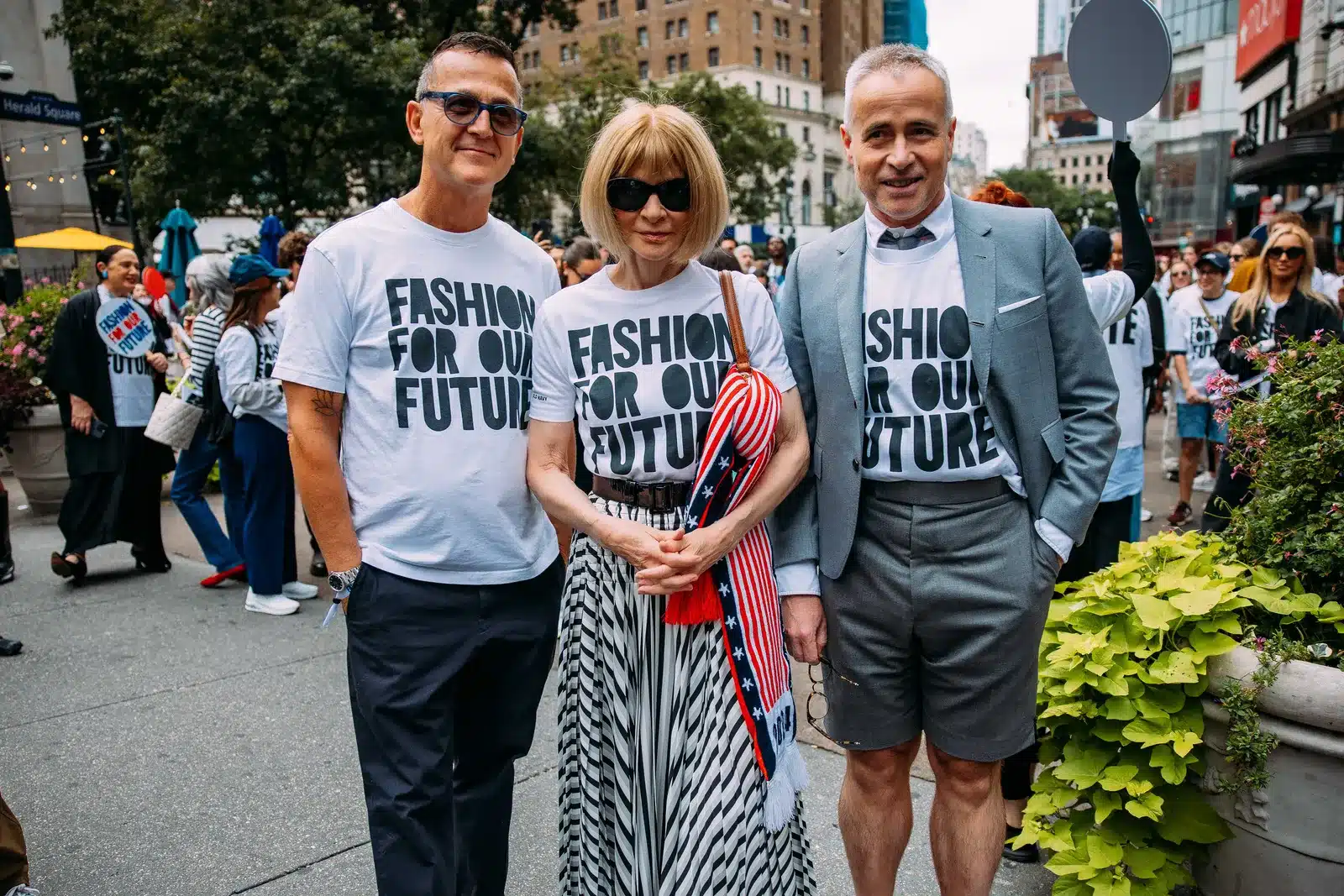
During September 2024 New York Fashion Week, Anna Wintour and Dr. Jill Biden led a march for voting awareness, accompanied by designers Tory Burch and the Proenza Schouler duo wearing Zac Posen’s “Fashion for Our Future” T-shirts. The moment illustrated how the runway — traditionally a commercial platform for seasonal collections — has become a site for direct political communication, particularly when the cultural stakes feel high enough to demand it.
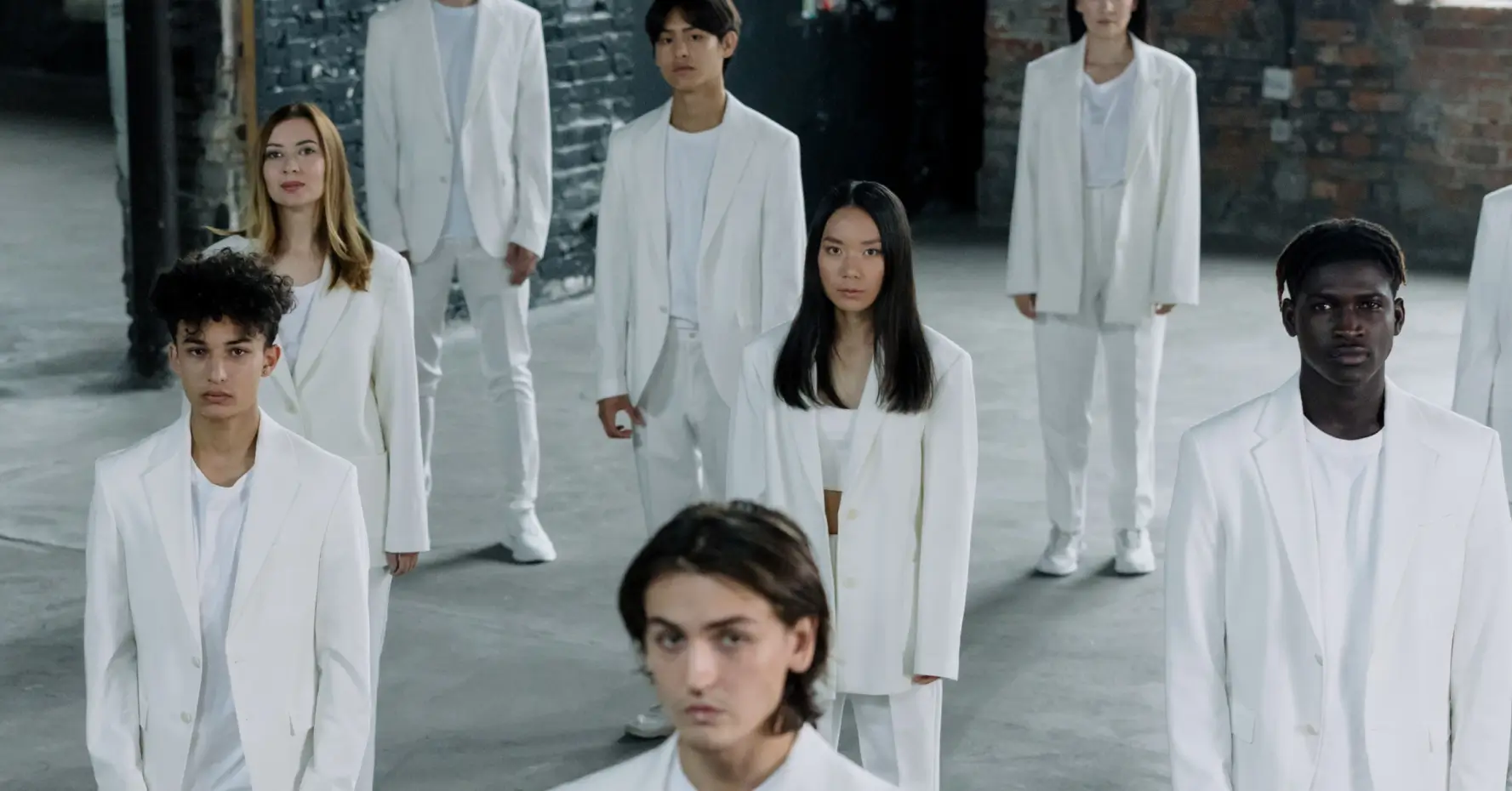
This is part of a longer pattern. The all-white dressing of Democratic women at the 2019 State of the Union referenced the suffragette movement. The “pussy hat” worn at the 2017 Women’s March generated one of the largest single-color mass fashion moments in recent history. The Black Lives Matter movement produced a wave of graphic tee culture that crossed from activist communication into mainstream pop culture clothing at commercial scale. In each case, the garment became the medium for the message — and the message reached audiences who would not have engaged with it through any other channel.
Sustainability as Aesthetic Stance
The integration of environmental consciousness into popular fashion has moved from niche to mainstream over the past decade — and the aesthetic expression of that integration is itself a form of cultural communication. Diesel’s Spring/Summer 2025 runway collection — built from 14,800 kilograms of denim waste — was not simply a sustainability initiative. It was a design statement: “beauty in waste” as a deliberate aesthetic philosophy, presented on a runway that itself embodied the circular design principles it advocated.
On the street, patchwork, fringe, repurposed denim, visible mending, and deliberately “unfinished” construction details have become the visual language of sustainability-conscious dressing — readable cultural signals that communicate values as clearly as any logo or brand affiliation. The emergence of this aesthetic within fashion in pop culture reflects a broader shift in what “luxury” means: from newness and pristine finish toward rarity, craft, and intentionality.

What the Fashion-Pop Culture Relationship Means for Design and Styling Students
For students developing their practice across fashion design and styling, understanding pop culture fashion is not a peripheral concern — it is central to developing the cultural literacy that distinguishes a professional from a technically competent one.
Cultural Awareness as a Design Competency
A designer or stylist who does not read culture cannot make work that resonates with culture. The most commercially and critically successful fashion work of any era is almost always the work that most accurately identifies and responds to the cultural moment — not by imitating it, but by interpreting it through a distinct creative voice. This requires actively engaging with fashion in pop culture: following music, film, politics, social movements, and digital culture as seriously as trend forecasts and runway reviews.
Pop Culture as Research Methodology
The structured practice of tracking cultural moments and their fashion responses — building a personal archive of pop culture clothing examples, identifying the mechanisms by which cultural shifts become aesthetic shifts, and developing the analytical vocabulary to articulate those connections — is a legitimate and valuable research methodology. It produces the kind of culturally grounded creative work that is both more original and more durable than work derived purely from aesthetic references.
This is also where fashion in pop culture connects most directly to the concept of fashion inspiration: the richest sources of design inspiration are not always found within the fashion system itself, but in the broader cultural conversation that the fashion system is responding to and, in turn, shaping.

Develop Cultural Intelligence at Istituto Marangoni Miami
At Istituto Marangoni Miami, the relationship between fashion and pop culture is not studied as background context — it is embedded in how students approach every brief, collection, and professional project. Located in the heart of Miami’s Design District, a city where Latin America, the Caribbean, Europe, and North America converge in a single cultural geography, students are immersed in one of the most culturally complex fashion environments anywhere. The intersection of music, art, politics, and style that defines Miami’s identity is the same intersection that drives the most significant moments in global popular fashion.
As an internationally recognized fashion design school, Istituto Marangoni Miami prepares students to understand fashion not just as a technical discipline but as a form of cultural expression — one that is constantly in dialogue with the politics, music, social movements, and shifting values of the world around it. Faculty with active industry experience bring current cultural analysis into the classroom, and the curriculum explicitly develops the critical awareness needed to create work that resonates beyond the moment it is made.
Whether beginning with an associate degree in fashion styling, developing a sophisticated creative voice through a bachelor degree in fashion styling, or advancing into graduate-level strategic thinking through a master degree in fashion design, students at IMM are trained to design and style not just for today’s cultural moment — but with the awareness to anticipate where the conversation is going next.
Fashion speaks. The designers and stylists who make the most enduring work are those who have something to say — and who understand what the culture around them is saying well enough to respond to it with precision and originality.
Explore all programs at Istituto Marangoni Miami — and begin developing the cultural intelligence that serious fashion professionals need.
Share with
Comments (1)
Comments are disabled.
★★★★★
More Blog
All Blog
Best Fashion Schools in Florida: How to Compare Programs
 Read More
Wondering where to find fashion inspiration? Well, the simple answer is that creative inspiration exists all around you—you just have to know where to look. Like any artistic undertaking, fashion design and styling are often informed by outside influences, including those that inspire self-reflection and allow us to better understand ourselves. Tapping into the things, […]
What Can You Do with a Fashion Degree? Jobs, Salaries, and Career Paths
 Read More
The choice of fabric is vital in the design and production of garments. Not only does the design affect the fabric but also the target audience. The age of the intended demographic decides the type of material that would best suit the use. Clothing for infants would normally be breathable and comfortable to avoid irritating their sensitive skin, whereas the ideal fabrics for toddlers would be those that are easy to handle to match their active movements.
Fashion School Portfolio Requirements: What Admissions Actually Expect
 Read More
The choice of fabric is vital in the design and production of garments. Not only does the design affect the fabric but also the target audience. The age of the intended demographic decides the type of material that would best suit the use. Clothing for infants would normally be breathable and comfortable to avoid irritating their sensitive skin, whereas the ideal fabrics for toddlers would be those that are easy to handle to match their active movements.
Advance Your Career in Fashion Marketing Universities
Our article, “Dressing for Uncertainty: Fashion’s Response to Politics, Pop Culture, and Sustainability”, delves into the heart of this topic, offering fresh perspectives and inspiration for fashion enthusiasts. It shows how the idea resonates with today’s creative minds and influences the trends of tomorrow. By examining real-world examples, it reveals the strategies and ideas driving forward our industry.
If you’re ready to turn your passion into a career, our fashion marketing universities program equips you with the knowledge and skills to thrive. From strategic thinking to hands-on practice, you’ll learn to turn ideas into reality.
At Istituto Marangoni Miami, we nurture future leaders in fashion and design. Join a community where creativity meets business. Begin your journey today and help shape the future of style. Embrace the journey to become an industry innovator.
It is important to me that sustainability becomes not just a trend, but part of the fashion philosophy. It influences not only the choice of materials, but also attitudes towards production and consumption